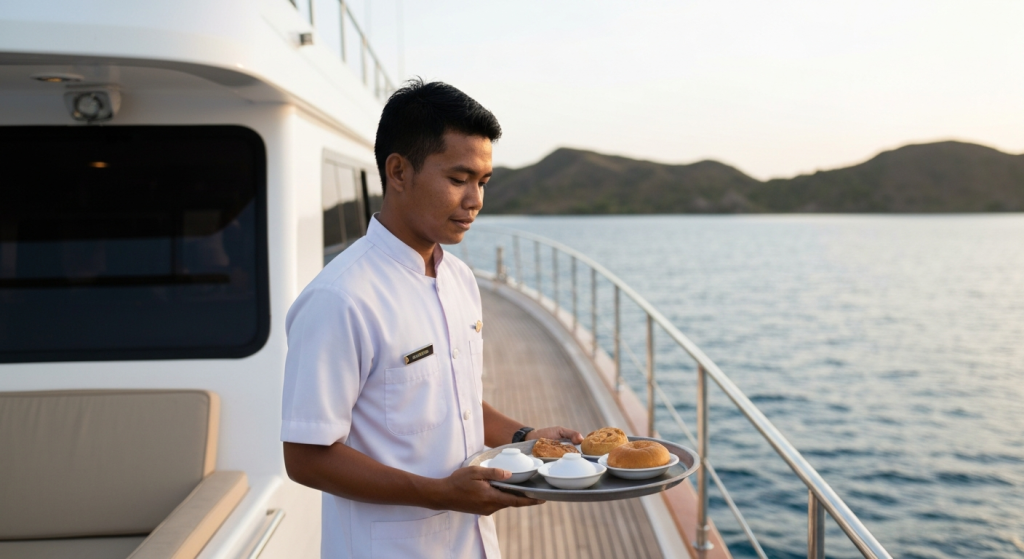
Ensuring safety aboard any vessel operating in the Komodo National Park is paramount for an enjoyable and secure experience. Reputable Komodo cruise operators prioritize stringent crew certifications and adhere to comprehensive safety protocols, reflecting a commitment to passenger well-being. Indonesia, a significant maritime nation, enforces international maritime safety standards across its waters. The Ministry of Transportation of the Republic of Indonesia issues critical certifications for all maritime personnel and vessels, with regular inspections ensuring compliance. For instance, many vessels operating within the Komodo archipelago must undergo annual safety checks, verifying equipment functionality and structural integrity. This regulatory oversight is crucial for maintaining operational standards for the hundreds of boats departing Labuan Bajo annually.
Mandatory Maritime Certifications for Komodo Cruise Crew
All crew members on a professional Komodo cruise ship hold specific, mandatory maritime certifications. These certifications ensure personnel possess the necessary skills and knowledge for safe vessel operation and emergency response. The International Convention on Standards of Training, Certification and Watchkeeping for Seafarers (STCW), adopted in 1978, forms the global benchmark for these qualifications. Indonesian maritime authorities, under the Directorate General of Sea Transportation, implement these standards rigorously.
Key positions like Captains and Chief Engineers require advanced certifications, including Master Class III (ANT III) or IV (ANT IV) and Engine Officer Class III (ATT III) or IV (ATT IV), respectively. These certificates demonstrate proficiency in navigation, marine engineering, and maritime law. All crew members, from deckhands to chefs, also complete Basic Safety Training (BST), which covers personal survival techniques, fire prevention and firefighting, elementary first aid, and personal safety and social responsibilities. These certifications are typically renewed every five years, requiring refresher courses to keep skills current. Operators like Best Komodo Cruise Tours often mandate additional internal training beyond these baseline requirements, covering specific vessel systems and local operational nuances. This layered approach ensures every crew member understands their role in maintaining safety standards for guests, whether on a 3D2N or 4D3N itinerary.
Essential Onboard Safety Equipment and Emergency Procedures
Beyond certified crew, every reliable Komodo cruise boat carries a full complement of safety equipment and implements clear emergency procedures. Vessels undergo annual inspections by government agencies to verify the presence and functionality of all safety gear. Each boat, whether a budget shared trip or a luxury phinisi, must carry life jackets for 100% of its maximum passenger capacity, plus additional spares. Life rafts, often with a capacity for 15-25 individuals, are also standard equipment, ensuring buoyancy in an evacuation scenario.
Communication systems are critical for safety at sea. All commercial Komodo cruise ships are equipped with VHF marine radios for communication with other vessels and shore stations. Many mid-range to luxury boats also feature satellite phones for reliable long-distance communication, especially when outside cellular range. Comprehensive first aid kits are readily accessible, and at least one crew member holds advanced first aid certification. Emergency drills, including fire and evacuation procedures, are conducted regularly, often weekly or monthly, to ensure crew readiness. Guests receive a detailed safety briefing before departure, covering muster points, life jacket locations, and emergency exits. This proactive approach ensures passenger safety during activities like snorkeling or treks to Padar Island.
Rigorous Vessel Maintenance and Regulatory Compliance
The structural integrity and mechanical reliability of a Komodo cruise vessel directly impact passenger safety. Reputable operators prioritize rigorous maintenance schedules, often exceeding minimum regulatory requirements. Most phinisi vessels, for example, undergo dry-docking every 1-2 years for thorough hull inspection, engine overhaul, and general repairs. Boats launched after 2020 or those undergoing significant refits after 2023 generally feature modern safety systems and improved build quality. The maximum number of passengers is strictly regulated, with a sweet spot of 10-20 guests for a more personalized and safer experience on many mid-range shared phinisi cruises, compared to larger budget boats carrying 30+ individuals.
Indonesian maritime regulations mandate annual surveys for all commercial passenger vessels, checking engine performance, electrical systems, and navigation equipment. Compliance with these regulations is crucial for obtaining and maintaining operational permits. Operators ensure tenders and speedboats, used for transfers to beaches or snorkeling sites like Manta Point, are well-maintained and operated by certified crew. This commitment to regular maintenance and adherence to government standards minimizes mechanical failures and ensures a smooth, safe operation. The focus on boat quality directly addresses a primary decision factor for guests, especially families with teens, who prioritize safety and reliable infrastructure.
Navigating Komodo National Park: Specific Safety Considerations
Cruising within Komodo National Park presents unique environmental and wildlife safety considerations. The park is renowned for its strong currents, particularly in areas like Komodo Strait and Sape Strait. Experienced captains with extensive local knowledge are essential for safely navigating these waters, choosing appropriate anchoring spots, and timing activities like snorkeling or diving. Operators often provide detailed briefings on current conditions before water activities.
Interacting with wildlife, especially Komodo dragons, requires strict adherence to park ranger guidelines. Visitors receive mandatory safety instructions before any trek on Komodo or Rinca Island, emphasizing keeping a safe distance and following the appointed ranger. The park is a UNESCO World Heritage site, and its delicate ecosystem demands respectful and safe practices. This includes proper waste management, with all reputable cruises implementing strict no-littering policies and responsible waste disposal back in Labuan Bajo. Anchoring protocols also protect coral reefs, with vessels using designated mooring buoys or anchoring in sandy areas to prevent damage. These specific protocols contribute significantly to the overall safety framework within this sensitive marine environment, helping preserve the park for future visitors and ensuring safe experiences.
Is a Komodo Cruise Safe in 2026? Understanding Operator Standards
Many prospective guests ask, “Is a Komodo cruise safe in 2026?” The answer largely depends on the operator’s adherence to established safety standards and regulations. The Indonesian government, through its Ministry of Tourism and Creative Economy (kemenparekraf.go.id), actively promotes safe tourism practices, including in Komodo National Park. Operators who prioritize safety invest in crew training, regular vessel maintenance, and comprehensive insurance. This commitment often translates into transparent communication regarding safety protocols and a willingness to answer detailed questions from guests. For instance, a reliable operator will clearly state whether the Komodo National Park entrance fee, approximately IDR 600,000 (~USD 40) per person, is included or excluded from their cruise package, demonstrating clarity in their offerings.
Guests should consider the age of the boat, its last major refit date, and the operator’s track record of safety. Reading recent reviews from 2024-2026 on platforms like Google or TripAdvisor provides valuable insights into other travelers’ experiences. Families with teens, for example, often prioritize boats with private bathrooms and a clear minimum age policy, such as age 10 for some higher-end operators. Choosing an operator with flexible rescheduling or clear cancellation policies also indicates a professional and trustworthy business practice. The overall safety of a Komodo cruise in 2026 is high when selecting an operator dedicated to upholding and exceeding industry safety benchmarks.
Key Questions for Choosing a Safe Operator
Selecting a Komodo cruise requires careful consideration of safety aspects. Prospective guests should ask specific questions to evaluate an operator’s commitment to safety:
- What are the specific maritime certifications held by the Captain and Chief Engineer?
- When was the vessel last dry-docked for maintenance, and when were its last government safety inspections?
- What is the exact maximum passenger capacity of the boat, and what is the crew-to-guest ratio for the planned trip?
- Where are the life jackets stored, and are there sufficient numbers for every passenger and crew member?
- What emergency communication equipment, such as VHF radio and satellite phone, is available onboard?
- What are the established emergency protocols for medical situations, adverse weather, or other unforeseen events?
- Does at least one crew member possess advanced first aid training, and is a comprehensive medical kit readily available?
- How does the operator manage dietary restrictions, and what measures are in place for drinking water safety, such as onboard filtration?
- Are tenders or speedboats used for transfers regularly maintained, and are their operators certified?
- Can the operator provide recent photos of the actual boat and crew, not just generic stock images?
- What is the company’s policy on free or low-penalty rescheduling in case of unforeseen circumstances?
Prioritizing safety ensures a memorable and worry-free experience in one of the world’s most unique destinations. Best Komodo Cruise Tours connects guests with operators who demonstrate an unwavering commitment to these standards. Our partners adhere to strict Indonesian maritime regulations and maintain high operational safety. We encourage all travelers to contact us directly with any safety-related questions. For details on our diverse cruise options, including 3D2N shared trips from Labuan Bajo, explore our Komodo cruise packages. Understanding these safety measures helps guests make informed decisions, whether they seek a budget-friendly shared trip or a luxury phinisi experience. We can also provide specific information regarding what to expect on a best Komodo cruise 3D2N from Labuan Bajo, ensuring all safety aspects are covered.